About 559 minutes
The Life of Napoleon Bonaparte. Vol. 3 (of 4) — Context and Discussion
Fantasy Juvenile Worlds
128,415 recorded words. 383 minutes difference from this book's estimate.
View Gutenberg source #27289
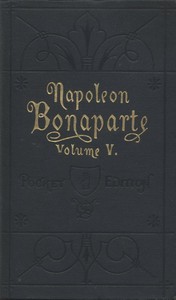
Before opening Life of Napoleon Bonaparte, Volume V. — Inside the Classic, the edition data offers a quick orientation: 216,542 words, 15 hr 42 min estimated reading time, and 27 detected text sections.
The text analysis averages about 28.5 words per sentence, while the detected sections provide another way to judge how the source is divided.
Project Gutenberg metadata also associates the work with “Napoleon I, Emperor of the French, 1769-1821,” connecting these edition facts with the source record’s subject description.
Explore this collection
These alternatives are selected using recorded categories and estimated reading time.
About 559 minutes
Fantasy Juvenile Worlds
128,415 recorded words. 383 minutes difference from this book's estimate.
View Gutenberg source #27289About 538 minutes
Fantasy Juvenile Worlds
123,535 recorded words. 404 minutes difference from this book's estimate.
View Gutenberg source #59832About 489 minutes
Fantasy Juvenile Worlds
112,469 recorded words. 453 minutes difference from this book's estimate.
View Gutenberg source #13689Search stored excerpts and compare books → Choose by your preferences →
Choices use stored catalog measurements. Estimates vary with reading speed. A shared category is a catalog label, not a claim that two books have the same argument or literary quality.
Search reads excerpt text stored with this catalog and links to its associated Gutenberg record. The connection is stored in the site database; this tool does not recheck that every excerpt is word-for-word identical to that external record. Excerpt search does not cover every chapter and does not verify historical publication dates.
Catalog snapshot checked: 2026-09-26. Coverage: 90 public books, 90 available source excerpts.
Calculated from edition completeness, EPUB availability, text structure and catalogue metadata. Not a user rating.
Total of 100 points, scaled to a 2.5-5.0 range. Editions with an empty description or a missing EPUB file are not scored.
Public-domain source text
The source text is kept in the dedicated reader, separate from this catalogue record and its commentary.
Sir Walter Scott opens this volume with a dense sequence of military maneuvers—Blucher at Soissons, the battles of Craonne and Laon, the retreat toward Paris—before shifting to the political collapse that follows. The table of contents alone signals a narrative driven by place names and troop movements, but the excerpts reveal a historian who repeatedly pauses to scrutinize sources. When recounting Napoleon's surrender, Scott reproduces Captain Maitland's journal verbatim, then immediately contrasts it with Count Las Cases' version, noting discrepancies in dates and the count's concealed knowledge of English. This forensic habit, rather than a simple chronicle of events, defines the volume's approach.
The most striking feature of the excerpts is Scott’s willingness to let primary documents speak, then to challenge them. In the Maitland–Las Cases exchange, he quotes the captain’s journal at length, including the crucial caveat that Maitland had “no authority to make conditions of any sort.” He then notes that Las Cases “dissembled his acquaintance with the English language,” implying that any misunderstanding was partly self-inflicted. Scott does not simply accept either account; he juxtaposes them, highlighting that Las Cases’ phrasing “is so expressed as to lead the reader to believe” Maitland had received new orders, when in fact he had not. This method—presenting evidence, then exposing its rhetorical slant—recurs throughout the volume and rewards careful attention.
The chapter summaries and early pages are packed with proper nouns: Soissons, Craonne, Laon, Rheims, Bar-sur-Aube, Arcis. Scott’s prose in these sections is brisk and factual, tracking Napoleon’s movements day by day. Yet the excerpts also show him stepping back to assess strategic logic, as when he discusses “Plans of Buonaparte—Military and Political Questions regarding Paris.” The reader is expected to follow a rapid succession of engagements without much explanatory hand-holding. The density of names and dates can be disorienting, but it mirrors the chaos of the 1814 campaign. Scott assumes a reader already familiar with the broad outline of the Napoleonic Wars and focuses on the decisions and miscalculations that led to the fall of Paris.
Scott devotes several chapters to the political maneuvering in Paris after the Allied entry. He catalogs the factions—Royalists, Revolutionists, Buonapartists—and names key figures such as Talleyrand and Chateaubriand. The excerpts show him weighing the legality of the Provisional Government’s decree of forfeiture, a question he explicitly raises: “The Legality of these Proceedings discussed.” He also notes the shifting sentiments of the lower classes and the military, suggesting that Napoleon’s support was not monolithic. The narrative then moves to Fontainebleau, where Napoleon issues his abdication document on April 4. Scott’s treatment here is less about dramatic climax than about institutional process; he is as interested in the constitutional niceties as in the personal drama.
The longest excerpt concerns Napoleon’s decision to surrender to Captain Maitland aboard HMS Bellerophon. Scott presents two conflicting accounts: Maitland’s journal, which insists he gave no assurances beyond conveying Napoleon to England, and Las Cases’ memoir, which implies an invitation or promise of good treatment. Scott’s own judgment is clear—he calls Las Cases’ version “exaggerated” and “inaccurate”—but he does not suppress the alternative. Instead, he lets the reader see the raw materials of historical dispute. The passage is a microcosm of Scott’s method: he trusts documentary evidence, but he knows that documents can be shaped by their authors’ interests. The result is a narrative that invites the reader to weigh evidence alongside the author.
Readers approaching this volume should come prepared for a historian who argues through quotation and cross-examination. Scott does not hide his own conclusions, but he lays out the evidence—including evidence that contradicts his preferred version—with unusual transparency. Pay close attention to the footnotes and the moments when Scott explicitly compares sources; these are where the book’s real argument unfolds. The military narrative is swift and assumes prior knowledge, but the legal and diplomatic sections reward slower reading.
I often think of Scott's final account of Napoleon—how a life's last chapters ask for patience, not verdicts. There's a kindred humility in his earlier frontier journal, where maps fray into memory. Scott's Wabash Expedition, 1791 — Reading Companion holds that same quiet weighing of what cannot be finished cleanly.
Your answers remain private and are stored only in this browser.