About 385 minutes
Discovery of Witches The Wonderfull Discoverie of Witches in the Countie of Lancaster — Text and Context
Fantasy Juvenile Worlds
88,547 recorded words. 27 minutes difference from this book's estimate.
View Gutenberg source #18253
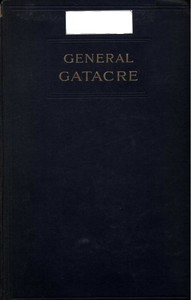
The catalog record for General Gatacre The Story of the Life and Services of Sir William Forbes Gatacre, K.C.B., D.S.O., 1843-1906 — Background and Themes provides practical reading context through 82,319 words, 5 hr 58 min estimated reading time, and 9 detected text sections.
The text analysis averages about 22.8 words per sentence, while the detected sections provide another way to judge how the source is divided.
Project Gutenberg metadata also associates the work with “South African War, 1899-1902,” connecting these edition facts with the source record’s subject description.
Explore this collection
These alternatives are selected using recorded categories and estimated reading time.
About 385 minutes
Fantasy Juvenile Worlds
88,547 recorded words. 27 minutes difference from this book's estimate.
View Gutenberg source #18253About 325 minutes
Fantasy Juvenile Worlds
74,679 recorded words. 33 minutes difference from this book's estimate.
View Gutenberg source #47201About 439 minutes
Fantasy Juvenile Worlds
100,963 recorded words. 81 minutes difference from this book's estimate.
View Gutenberg source #56387Search stored excerpts and compare books → Choose by your preferences →
Choices use stored catalog measurements. Estimates vary with reading speed. A shared category is a catalog label, not a claim that two books have the same argument or literary quality.
Search reads excerpt text stored with this catalog and links to its associated Gutenberg record. The connection is stored in the site database; this tool does not recheck that every excerpt is word-for-word identical to that external record. Excerpt search does not cover every chapter and does not verify historical publication dates.
Catalog snapshot checked: 2026-09-26. Coverage: 90 public books, 90 available source excerpts.
Calculated from edition completeness, EPUB availability, text structure and catalogue metadata. Not a user rating.
Total of 100 points, scaled to a 2.5-5.0 range. Editions with an empty description or a missing EPUB file are not scored.
Public-domain source text
The source text is kept in the dedicated reader, separate from this catalogue record and its commentary.
The biography opens with a preface that establishes a dual narrative strategy: the first half relies on others' recollections, while the second half draws on the author's personal knowledge. This structural division shapes the book's voice, moving from a restrained, fact-based account to a more intimate, firsthand perspective. The author explicitly avoids 'imaginary amplification,' grounding the early chapters in documented evidence.
The narrative voice shifts markedly between the early and later chapters. In the preface, the author states she has 'studiously avoided any attempt to eke out the material with an imaginary amplification' for the first half, relying on recollections of others. The latter half, however, draws on her 'own personal knowledge' and a wider range of sources, including Sir William's letters and telegrams. This transition is evident in the excerpt on the Bombay plague, where the text incorporates official government correspondence, such as a letter from the Government of Bombay praising Gatacre's 'energy,' alongside his own pseudonymous newspaper articles. The inclusion of direct quotations from telegrams and reports gives the later sections a documentary immediacy absent from the earlier, more summarized passages.
The pace of the narrative accelerates during the account of the Bombay plague crisis. The text moves briskly through a sequence of concrete actions: Gatacre publishes articles under a pseudonym, the municipality votes funds, Lord Sandhurst offers his residence, and within ten days 150 beds are ready. The author lists specific details—'matting huts,' 'a little Oratory,' 'Roman Catholic Convents'—that create a sense of rapid, organized response. This section contrasts with the more measured, chronological tone of earlier military service descriptions. The inclusion of a government letter dated February 23, 1897, further anchors the timeline, while the author's commentary that the Governor 'wanted a man endowed equally with the administrative capacity to conceive a comprehensive plan' signals a shift toward evaluative language.
The author frequently lets documents speak for themselves, but her own voice emerges through framing and selection. In the plague section, she reproduces Gatacre's forceful prose from The Times of India: 'What is a lakh or ten lakhs of rupees where the prosperity of Bombay is concerned?' The blunt, rhetorical question reveals his directness. The author then adds that 'the municipality took the hint,' a wry comment that underscores his influence. Later, she describes Lord Sandhurst's decision to appoint Gatacre as a 'coup' that 'startling supersession of all the traditions.' Such phrasing injects a personal, almost admiring tone into the otherwise official record. The preface's dedication to 'two friends' and the epigraph from George Meredith further hint at the author's emotional investment, though she maintains a disciplined focus on factual narrative.
Readers attentive to narrative voice will observe how the biography's structure mirrors its subject's career: methodical in early life, urgent in crisis, and reflective in aftermath. The author's restraint in the first half makes the later, more vivid passages—where she draws on letters and personal knowledge—all the more striking. This is a work that rewards attention to its shifts in pace and documentary texture.
Reading about Gatacre’s steady, unsung toil made me think of my father’s old map drawer, and how I once found a folded letter inside it, yellowed and unread. That reminded me of Scott's Wabash Expedition, 1791 — Reading Companion, which also exhumes a quiet, almost forgotten voice from the margins of history. Both books feel like opening a drawer someone else forgot.
A brief reflection can help important ideas stay with you longer.