About 538 minutes
History of the Conquest of Mexico; vol. 4/4 — Context and Discussion
Fantasy Juvenile Worlds
123,535 recorded words. 21 minutes difference from this book's estimate.
View Gutenberg source #59832

The catalog record for The Life of Napoleon Bonaparte. Vol. 3 (of 4) — Context and Discussion provides practical reading context through 128,415 words, 9 hr 19 min estimated reading time, and 12 detected text sections.
The text analysis averages about 25.0 words per sentence, while the detected sections provide another way to judge how the source is divided.
Project Gutenberg metadata also associates the work with “Napoleon I, Emperor of the French, 1769-1821,” connecting these edition facts with the source record’s subject description.
Explore this collection
These alternatives are selected using recorded categories and estimated reading time.
About 538 minutes
Fantasy Juvenile Worlds
123,535 recorded words. 21 minutes difference from this book's estimate.
View Gutenberg source #59832About 489 minutes
Fantasy Juvenile Worlds
112,469 recorded words. 70 minutes difference from this book's estimate.
View Gutenberg source #13689About 468 minutes
Fantasy Juvenile Worlds
107,448 recorded words. 91 minutes difference from this book's estimate.
View Gutenberg source #10908Search stored excerpts and compare books → Choose by your preferences →
Choices use stored catalog measurements. Estimates vary with reading speed. A shared category is a catalog label, not a claim that two books have the same argument or literary quality.
Search reads excerpt text stored with this catalog and links to its associated Gutenberg record. The connection is stored in the site database; this tool does not recheck that every excerpt is word-for-word identical to that external record. Excerpt search does not cover every chapter and does not verify historical publication dates.
Catalog snapshot checked: 2026-09-26. Coverage: 90 public books, 90 available source excerpts.
Calculated from edition completeness, EPUB availability, text structure and catalogue metadata. Not a user rating.
Total of 100 points, scaled to a 2.5-5.0 range. Editions with an empty description or a missing EPUB file are not scored.
Public-domain source text
The source text is kept in the dedicated reader, separate from this catalogue record and its commentary.
Sloane's third volume opens with Napoleon's campaign against Russia in 1806-07, immediately establishing a tension between military conquest and political strategy. The author notes that Napoleon's dealings with Poland were driven by 'strategy' rather than settled policy, as he 'never conquered either Russia or Poland.' This pattern of incomplete domination recurs throughout the volume, from the indecisive victory at Friedland to the failed Spanish campaign. Sloane's narrative emphasizes the logistical and human costs of war, such as the 'homesickness of the French' and the 'discontent in the Grand Army,' while also detailing the tactical decisions that shaped battles.
Sloane provides granular descriptions of battlefields, such as the 'low meadows' near Aspern and the 'stone barns with walls many feet thick' that became focal points of combat. At Aspern, the fighting is described as 'awful,' with the churchyard and a barn serving as contested strongpoints. The author notes the fragility of Napoleon's bridge over the Danube, which gave way under 'masses of rubbish' from a freshet, a detail that underscores how environmental factors could undo careful planning. Sloane also records Napoleon's overconfidence before the battle, which 'disappeared at once' when the Austrians appeared in force. These passages ground the narrative in concrete, observable phenomena rather than abstract strategy.
The volume frequently highlights the roles of subordinate commanders like Masséna, Lannes, and Bessières, whose actions are woven into the tactical narrative. Sloane notes that Napoleon's orders were sometimes ambiguous—Pelet's memoirs claim the Emperor simply ordered troops to 'cross the river and march against the enemy.' The author also points to the 'weakness of the Russians' and the 'ability of Bennigsen' as factors in the campaign, avoiding simple hero-villain dichotomies. The 'discontent in the Grand Army' and 'homesickness of the French' are mentioned as internal pressures, suggesting that morale was a persistent concern. These observations keep the focus on the human scale of warfare.
Sloane frames Napoleon's Russian campaign as part of a larger 'continental system' aimed at isolating Britain. The author writes that the struggle was 'not for Russian abasement but for Russian friendship' in service of this system. Yet the volume repeatedly shows the system's incompleteness: the Spanish campaign fails, Austria transforms and re-enters the war, and tensions with the Czar escalate. The 'Tilsit' chapters depict a temporary alliance that later unravels. Sloane's narrative thus presents the continental system as a driving but ultimately unattainable goal, with each battle and treaty revealing new fractures. The reader is left to observe how Napoleon's strategic vision collides with the realities of European politics.
Readers of this volume will find a military history that resists simple narratives of triumph or decline. Sloane's attention to the physical details of battlefields, the decisions of commanders, and the political context invites careful comparison between Napoleon's stated aims and the outcomes on the ground. The excerpts suggest a work more concerned with documenting complexity than with celebrating or condemning its subject.
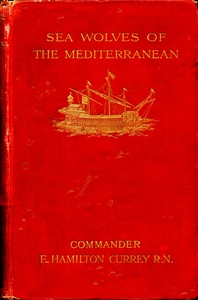
That rainy afternoon, I lingered over Napoleon’s grim triumph at Eylau, the mud and patience of it all. The sheer stubbornness of command stayed with me. Later, browsing the shelves, I found myself pulled toward a different kind of struggle, equally relentless, fought on shifting seas. Sea-Wolves of the Mediterranean: The grand period of the Moslem corsairs — Reading Notes felt like a quiet, salt-stained echo of that same desperate persistence.
Answer a few questions and save a private reflection on this device.