About 69 minutes
A General's Letters to His Son on Minor Tactics — Inside the Classic
Fantasy Juvenile Worlds
15,697 recorded words. 1 minutes difference from this book's estimate.
View Gutenberg source #52640
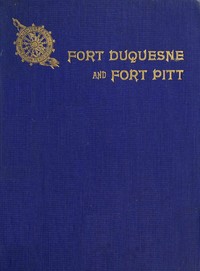
The catalog record for Fort Duquesne and Fort Pitt; Early Names of Pittsburgh Streets — Key Ideas to Explore provides practical reading context through 16,066 words, 1 hr 10 min estimated reading time, and 3 detected text sections.
The text analysis averages about 22.4 words per sentence, while the detected sections provide another way to judge how the source is divided.
Project Gutenberg metadata also associates the work with “Pittsburgh (Pa.) -- History,” connecting these edition facts with the source record’s subject description.
Explore this collection
These alternatives are selected using recorded categories and estimated reading time.
About 69 minutes
Fantasy Juvenile Worlds
15,697 recorded words. 1 minutes difference from this book's estimate.
View Gutenberg source #52640About 75 minutes
Fantasy Juvenile Worlds
17,096 recorded words. 5 minutes difference from this book's estimate.
View Gutenberg source #33621About 60 minutes
Fantasy Juvenile Worlds
13,604 recorded words. 10 minutes difference from this book's estimate.
View Gutenberg source #4850Search stored excerpts and compare books → Choose by your preferences →
Choices use stored catalog measurements. Estimates vary with reading speed. A shared category is a catalog label, not a claim that two books have the same argument or literary quality.
Search reads excerpt text stored with this catalog and links to its associated Gutenberg record. The connection is stored in the site database; this tool does not recheck that every excerpt is word-for-word identical to that external record. Excerpt search does not cover every chapter and does not verify historical publication dates.
Catalog snapshot checked: 2026-09-26. Coverage: 90 public books, 90 available source excerpts.
Calculated from edition completeness, EPUB availability, text structure and catalogue metadata. Not a user rating.
Total of 100 points, scaled to a 2.5-5.0 range. Editions with an empty description or a missing EPUB file are not scored.
Public-domain source text
The source text is kept in the dedicated reader, separate from this catalogue record and its commentary.
The 1921 sixth edition of Fort Duquesne and Fort Pitt; Early Names of Pittsburgh Streets, compiled by the Fort Pitt Society of the Daughters of the American Revolution, opens with a chronology that frames the struggle for the Forks of the Ohio as a series of precise military actions: Washington’s 1753 visit to Fort Le Boeuf, the French completion of Fort Duquesne in June 1754, and Braddock’s defeat exactly one year later. The text relies heavily on extracts from Parkman, Craig, Darlington, and Hildreth, yet its own editorial voice emerges in the selection of details—particularly the repeated emphasis on the physical destruction of forts and the harrowing conditions of frontier warfare.
The narrative begins by describing eighteenth-century maps of British America as “gashed with ten or twelve colored patches,” a visceral image that underscores the contested nature of the continent. The French and English claims are presented not as abstract legal arguments but as tangible, overlapping territories. The text notes that the French built a “chain of forts” to enforce their boundaries, while Washington recommended building a fort at the “Forks of the Ohio.” This language of possession—built, enforce, recommends—frames the conflict as a series of physical occupations rather than diplomatic negotiations. The chronology itself becomes a tool of argument, listing each fort’s construction and destruction as evidence of the shifting control.
Colonel Henry Bouquet emerges as the central figure in the later sections, described as “the man of iron will and iron hand.” The text details his 1763 march to relieve Fort Pitt, emphasizing the grueling conditions: “toiled on through the blazing heat of July over the Alleghanies.” The account of the Battle of Bushy Run is terse—two days of fighting, 115 British casualties—but the aftermath receives fuller treatment. Bouquet’s demand that the Indians deliver up prisoners before any treaty is a striking detail, and the scene of a mother singing a lullaby to her long-lost daughter, who “had almost forgotten her mother tongue,” provides a rare emotional pivot. The text notes that “not a blow was struck” in this campaign, yet the Indians were “vanquished” through the return of over three hundred captives.
The only physical remnant of Fort Pitt, Colonel Bouquet’s Redoubt built in 1764, is described as “the only existing monument of British occupancy in this region.” This statement, placed after the account of the siege and relief, gives the structure a symbolic weight. The text traces its survival through the abandonment of Fort Pitt in 1772, its renaming to Fort Dunmore, and its eventual ruinous state by 1791. The redoubt was purchased by General James O’Hara in 1805 and later presented to the Daughters of the American Revolution in 1894. The inclusion of this provenance—from military outpost to civic relic—reflects the compilers’ interest in preserving a tangible link to the events they narrate.
Readers should note that this edition is a compilation, not a single-author narrative, and its chronology and excerpts are selected to emphasize the strategic importance of the Forks of the Ohio. The text’s focus on Bouquet’s campaigns and the fate of the redoubt offers a specific lens through which to view the broader conflict. Pay attention to the recurring motifs of destruction and reconstruction, and the way the compilers use physical structures—forts, redoubts, maps—to anchor their historical claims.
Reading again how the DAR chronicled those contested forks of the Ohio, I found myself thinking of other crossings—of Nathan Hale’s quiet steadiness against André’s charm, both caught in their own gray margins. There is a particular ache in old names and older choices. It lingers, the way The Two Spies: Nathan Hale and John André — Reading Notes did for me, long after the lamp went out.
A brief reflection can help important ideas stay with you longer.