About 423 minutes
The Waterloo Roll Call With Biographical Notes and Anecdotes — Reading Companion
Science Fiction Utopias
97,279 recorded words. 4 minutes difference from this book's estimate.
View Gutenberg source #51143
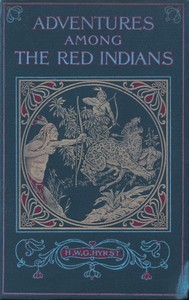
The source record for Adventures Among the Red Indians Romantic Incidents and Perils Amongst the Indians of North and South America — A Closer Reading measures this digital text at 96,162 words, 6 hr 59 min estimated reading time, and 12 detected text sections.
The text analysis averages about 25.9 words per sentence, while the detected sections provide another way to judge how the source is divided.
Project Gutenberg metadata also associates the work with “Indians of North America,” connecting these edition facts with the source record’s subject description.
Explore this collection
These alternatives are selected using recorded categories and estimated reading time.
About 423 minutes
Science Fiction Utopias
97,279 recorded words. 4 minutes difference from this book's estimate.
View Gutenberg source #51143About 411 minutes
Science Fiction Utopias
94,420 recorded words. 8 minutes difference from this book's estimate.
View Gutenberg source #60226About 409 minutes
Science Fiction Utopias
93,849 recorded words. 10 minutes difference from this book's estimate.
View Gutenberg source #72747Search stored excerpts and compare books → Choose by your preferences →
Choices use stored catalog measurements. Estimates vary with reading speed. A shared category is a catalog label, not a claim that two books have the same argument or literary quality.
Search reads excerpt text stored with this catalog and links to its associated Gutenberg record. The connection is stored in the site database; this tool does not recheck that every excerpt is word-for-word identical to that external record. Excerpt search does not cover every chapter and does not verify historical publication dates.
Catalog snapshot checked: 2026-09-26. Coverage: 90 public books, 90 available source excerpts.
Calculated from edition completeness, EPUB availability, text structure and catalogue metadata. Not a user rating.
Total of 100 points, scaled to a 2.5-5.0 range. Editions with an empty description or a missing EPUB file are not scored.
Public-domain source text
The source text is kept in the dedicated reader, separate from this catalogue record and its commentary.
The preface to Adventures Among the Red Indians frames the work as a record of a bygone era, noting that “every day sees the red race diminishing” and that the narratives “must necessarily relate mainly to a bygone generation.” This editorial note examines how the text balances romanticized adventure with a sober acknowledgment of colonial impact, using specific episodes—such as a bison hunt involving Pawnee guides and English hunters—to reveal tensions between cooperation, risk, and cultural displacement.
The preface establishes a retrospective tone, stating that the history of “the red man’s relations to those who ultimately were to be his rulers is a painful one.” It attributes population decline to colonists “both actively and involuntarily,” and describes modern Indians as having “settled down to an inoffensive and gypsy-like life on reserves.” This framing colors the subsequent adventures, which are presented as glimpses of a world already vanishing by 1911. The preface does not claim the narratives are fictional; instead, it positions them as drawn from real encounters, though the excerpts do not specify sources.
In the extended bison-hunt episode, the narrative voice shifts between the Englishmen’s inexperience and the Pawnees’ practiced skill. One Pawnee “drew first blood” with an arrow through a bison’s eye, while the Canadians and Englishmen fire rifles. The hunt is described as a coordinated effort: the Pawnees signal, the Canadians “brought their guns to the shoulder and fired one after the other,” and the party “spurred up the hill, the six guns all crashing out together.” Yet danger is ever-present: Fred is thrown from his horse and lies “bruised and giddy” near a maddened bull, rescued only by a Pawnee who “galloped up between them and with a couple of arrows brought the monster down.” The passage emphasizes mutual dependence—the Englishmen rely on Indian guidance and marksmanship—while also highlighting the physical risks of the chase.
The subtitle “Romantic Incidents and Perils” signals a dual focus on excitement and danger, a pattern visible in the excerpts. The prose is action-driven, with short, tense sentences: “Suddenly a white streak darted through the air,” “The remaining Pawnee had drawn first blood.” Dialogue is sparse but functional—shouts like “Get more to your left” or “Shoot the confounded horse” convey urgency. The narrative often shifts perspective, moving from the hunters’ collective view to individual moments of crisis, such as Coke’s “uncomfortable impression that the whole herd was charging upon him from the rear.” This technique sustains suspense while keeping the focus on observable events rather than interiority.
Readers should note that the excerpts represent only a fraction of the full work, which spans 96,000 words across multiple episodes. The editorial framing in the preface suggests a deliberate tension between adventure and elegy, but the extent to which the book critiques or reinforces colonial attitudes can only be assessed by reading the complete text. The bison-hunt scene, however, offers a clear example of how the narrative constructs danger through collaborative action and cultural encounter.
I have kept Adventures Among the Red Indians on my shelf for years, its tales of fading trails and brave, lonely hunts always stirring a certain ache. Oddly, that same quiet feeling of worlds ending returns in The Thirty Years War — Volume 01 — Reading Notes. Both books whisper of violence and change, yet their true kinship lies in that shared, patient sorrow for what the fire consumes.
A brief reflection can help important ideas stay with you longer.