About 53 minutes
Some Principles of Frontier Mountain Warfare — Themes and Context
Science Fiction Utopias
12,043 recorded words. 22 minutes difference from this book's estimate.
View Gutenberg source #55185
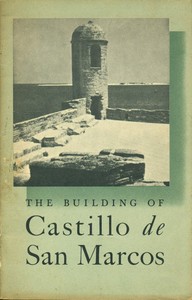
The Building of Castello de San Marcos National Park Service Interpretive Series, History No. 1 — Key Ideas to Explore can be approached with a clearer sense of reading commitment from its source measurements: 17,105 words, 1 hr 15 min estimated reading time, and 2 detected text sections.
The text analysis averages about 21.2 words per sentence, while the detected sections provide another way to judge how the source is divided.
Project Gutenberg metadata also associates the work with “Florida -- History -- Spanish colony, 1565-1763,” connecting these edition facts with the source record’s subject description.
Explore this collection
These alternatives are selected using recorded categories and estimated reading time.
About 53 minutes
Science Fiction Utopias
12,043 recorded words. 22 minutes difference from this book's estimate.
View Gutenberg source #55185About 50 minutes
Science Fiction Utopias
11,474 recorded words. 25 minutes difference from this book's estimate.
View Gutenberg source #4859About 46 minutes
Science Fiction Utopias
10,486 recorded words. 29 minutes difference from this book's estimate.
View Gutenberg source #56638Search stored excerpts and compare books → Choose by your preferences →
Choices use stored catalog measurements. Estimates vary with reading speed. A shared category is a catalog label, not a claim that two books have the same argument or literary quality.
Search reads excerpt text stored with this catalog and links to its associated Gutenberg record. The connection is stored in the site database; this tool does not recheck that every excerpt is word-for-word identical to that external record. Excerpt search does not cover every chapter and does not verify historical publication dates.
Catalog snapshot checked: 2026-09-26. Coverage: 90 public books, 90 available source excerpts.
Calculated from edition completeness, EPUB availability, text structure and catalogue metadata. Not a user rating.
Total of 100 points, scaled to a 2.5-5.0 range. Editions with an empty description or a missing EPUB file are not scored.
Public-domain source text
The source text is kept in the dedicated reader, separate from this catalogue record and its commentary.
The 1668 pirate raid on St. Augustine, described in the opening pages, is not merely a colorful anecdote but the central catalyst for the fort's construction. The account details how a supply ship from Vera Cruz was seized by pirates who then stormed the town, forcing Governor Guerra and 33 men to defend the old wooden fort. This event, the text argues, compelled the Queen of Spain to authorize a stone fortress. The narrative grounds the fort's origin in a specific, documented crisis rather than abstract military planning.
The excerpts reveal that construction proceeded under chronic scarcity. Governor Cabrera, facing poverty and hunger, resorted to buying supplies from a stray Dutch trader—an unlawful act justified by necessity. The text notes that when two subsidy payments finally arrived, soldiers received two years' back pay and provisions for 14 months. This detail underscores the irregular funding that plagued the project. The fort's completion was not a steady march but a series of improvisations: missing parapets were filled with dry stone, and the entire community—soldiers, men, and women—labored day and night when a corsair fleet appeared in 1683. The narrative emphasizes that the fort was built "in the face of poverty and hunger," not from abundance.
The text provides concrete descriptions of the castillo's construction. Pine beams "a foot thick and half again as wide" spanned 15 to 20 feet between courtyard walls, topped with planking "some 4 fingers thick." This roof, or terreplein, allowed artillerymen to move between bastions without descending into the courtyard. The fort included over 20 rooms for quarters, a chapel, and magazines. Outside, a ravelin guarded the main doorway, and the moat wall reached 6 to 8 feet high. The only major work remaining by summer 1686 was finishing the moat excavation and shore defenses. These specifics ground the fort in tangible materials and dimensions.
The fort's construction is interwoven with broader colonial conflicts. In 1686, Governor Cabrera sent Tomás de León to destroy Lord Cardross's Scotch colony at Port Royal, South Carolina, which the Spanish viewed as an illegal encroachment. León's force sacked Governor Morton's plantation on Edisto Island before a storm scattered the fleet. The text notes that this contest for the hinterlands involved traders from Charleston and Spanish soldiers and missionaries in western Florida, described as "an exciting, exasperating struggle of diplomacy and intrigue, trade and cupidity, war and religion." The fort was not an isolated project but a node in a network of imperial competition.
Readers should note that the excerpts cover only the first two chapters and a portion of the third. The narrative likely continues through later periods of the fort's use and eventual obsolescence. The glossary mentioned in the contents may aid with terms like ravelin and terreplein. The text is a government publication from 1962, reflecting mid-century National Park Service interpretive style, with an emphasis on dramatic events and material details rather than social history or Indigenous perspectives.
Reading about the Castillo’s long, patient construction—how each stone was hauled and set against the threat of raids—I found myself thinking of a quieter kind of preparation. The fort’s history is a story of waiting, of deliberate readiness. That same patient anticipation lingers in Hand Grenades: A handbook on rifle and hand grenades — Key Ideas to Explore, where the emphasis falls on careful, practiced motion rather than the chaos it wards against.
A brief reflection can help important ideas stay with you longer.