About 40 minutes
Ball's Bluff: An Episode and Its Consequences to Some of Us — Background and Themes
Adventure Picaresque Fiction
9,120 recorded words. 19 minutes difference from this book's estimate.
View Gutenberg source #31319
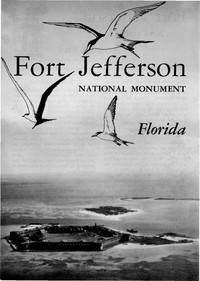
Before opening Fort Jefferson National Monument, Florida — Themes and Context, the edition data offers a quick orientation: 4,713 words, 21 min estimated reading time, and 1 detected text section.
The text analysis averages about 22.1 words per sentence, while the detected sections provide another way to judge how the source is divided.
Project Gutenberg metadata also associates the work with “Dry Tortugas National Park (Fla.),” connecting these edition facts with the source record’s subject description.
Explore this collection
These alternatives are selected using recorded categories and estimated reading time.
About 40 minutes
Adventure Picaresque Fiction
9,120 recorded words. 19 minutes difference from this book's estimate.
View Gutenberg source #31319About 48 minutes
Adventure Picaresque Fiction
11,010 recorded words. 27 minutes difference from this book's estimate.
View Gutenberg source #4857About 53 minutes
Adventure Picaresque Fiction
12,066 recorded words. 32 minutes difference from this book's estimate.
View Gutenberg source #26184Search stored excerpts and compare books → Choose by your preferences →
Choices use stored catalog measurements. Estimates vary with reading speed. A shared category is a catalog label, not a claim that two books have the same argument or literary quality.
Search reads excerpt text stored with this catalog and links to its associated Gutenberg record. The connection is stored in the site database; this tool does not recheck that every excerpt is word-for-word identical to that external record. Excerpt search does not cover every chapter and does not verify historical publication dates.
Catalog snapshot checked: 2026-09-26. Coverage: 90 public books, 90 available source excerpts.
Calculated from edition completeness, EPUB availability, text structure and catalogue metadata. Not a user rating.
Total of 100 points, scaled to a 2.5-5.0 range. Editions with an empty description or a missing EPUB file are not scored.
Public-domain source text
The source text is kept in the dedicated reader, separate from this catalogue record and its commentary.
The National Park Service's account of Fort Jefferson opens not with the fort itself but with a metaphor: reef islands trailing westward "like a strand of beads." The simile is the most figurative language in the entire excerpt; afterward the prose settles into a plain, reportorial mode that favors dates, measurements, and strategic calculations. The writer's diction consistently emphasizes scale and function—"half a mile in perimeter," "8-foot-thick walls," "designed for 450 guns"—while human presence is reduced to labor categories: "Artisans imported from the North and slaves from Key West." This is a document that treats the fort as an engineered object and a geopolitical chess piece, not a setting for drama.
The case for building Fort Jefferson is built entirely through verbs of control and hypothetical threat. A naval captain's 1830 survey asserts that Tortugas could "control navigation of the Gulf"; the text then lists dangers—British West Indies development, trouble in Cuba, a Texas alliance with France or England—as if they were inevitable. The phrase "keen memories of Jackson's fight with the British" is the only nod to emotion; otherwise the argument is purely logistical. The writer's choice to frame the fort as a response to a chain of geopolitical dominoes gives the narrative a deterministic momentum, even though the fort was never finished.
The section on construction reads like an inventory: dimensions, gun tiers, garrison size, labor sources. The writer notes that "slave labor did not end until Lincoln freed the slaves in 1863," but the sentence is placed as a chronological fact, not a moral judgment. The passive construction—"Artisans imported … and slaves … made up most of the labor gang"—distributes agency unevenly. The fort's incompleteness is stated without explanation: "it was never finished." The prose refuses to speculate on causes, leaving the reader to infer the gap between ambition and result.
Despite the title, the natural environment receives only brief, functional description. Ponce de León's naming for turtles is quoted, and the warning in "Dry Tortugas" is glossed: "no fresh water here." The islands are defined by what they lack—water—and by their position at the end of a chain. The writer does not evoke heat, light, or vegetation. The setting is a coordinate, not a scene. This restraint is consistent with the text's overall purpose: to explain why a fort was needed, not to make the reader feel the place.
Ponce de León, the naval captain, and Jackson appear only as names attached to actions or quotations. No personality is sketched. The writer's choice to keep historical actors at arm's length reinforces the text's institutional voice. The only direct speech is the captain's quoted phrase about controlling navigation; otherwise, all events are narrated in the passive or third-person plural. This flattening of agency makes the fort itself the protagonist—a structure acted upon by geopolitical forces, not by individuals.
Readers approaching this text should expect a document that prioritizes strategic reasoning over narrative or atmosphere. The National Park Service's prose is lean, factual, and almost entirely devoid of sensory detail. The fort emerges as a concept—a calculation of perimeter, guns, and geopolitical risk—rather than a physical place. This editorial note has focused on the authorial choices in diction and structure; the text rewards attention to what it omits as much as to what it states.
Sometimes I think about how the Park Service writes about Fort Jefferson — those spare, careful sentences about stone and salt and necessity. There’s a quiet power in that restraint, the way history hums beneath plain language. Reading The Empire of Austria; Its Rise and Present Power — A Reader’s Guide felt familiar, like watching someone hold a vast story without ever raising their voice.
Capture what you thought, learned, and would like to remember.