About 370 minutes
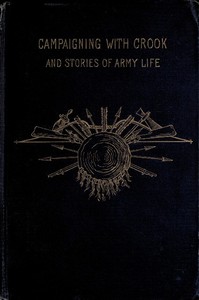
Campaigning with Crook, and Stories of Army Life — A Reader’s Guide
Adventure Picaresque Fiction
85,089 recorded words. 10 minutes difference from this book's estimate.
View Gutenberg source #37480

The source record for Charles Philip Yorke, Fourth Earl of Hardwicke, Vice-Admiral R.N. — a Memoir — Reading Notes measures this digital text at 82,574 words, 6 hr estimated reading time, and 7 detected text sections.
The text analysis averages about 25.5 words per sentence, while the detected sections provide another way to judge how the source is divided.
Project Gutenberg metadata also associates the work with “Hardwicke, Charles Philip Yorke, Earl of, 1799-1873,” connecting these edition facts with the source record’s subject description.
Explore this collection
These alternatives are selected using recorded categories and estimated reading time.
About 370 minutes
Adventure Picaresque Fiction
85,089 recorded words. 10 minutes difference from this book's estimate.
View Gutenberg source #37480About 326 minutes
Adventure Picaresque Fiction
74,945 recorded words. 34 minutes difference from this book's estimate.
View Gutenberg source #40479About 421 minutes
Adventure Picaresque Fiction
96,738 recorded words. 61 minutes difference from this book's estimate.
View Gutenberg source #62552Search stored excerpts and compare books → Choose by your preferences →
Choices use stored catalog measurements. Estimates vary with reading speed. A shared category is a catalog label, not a claim that two books have the same argument or literary quality.
Search reads excerpt text stored with this catalog and links to its associated Gutenberg record. The connection is stored in the site database; this tool does not recheck that every excerpt is word-for-word identical to that external record. Excerpt search does not cover every chapter and does not verify historical publication dates.
Catalog snapshot checked: 2026-09-26. Coverage: 90 public books, 90 available source excerpts.
Calculated from edition completeness, EPUB availability, text structure and catalogue metadata. Not a user rating.
Total of 100 points, scaled to a 2.5-5.0 range. Editions with an empty description or a missing EPUB file are not scored.
Public-domain source text
The source text is kept in the dedicated reader, separate from this catalogue record and its commentary.
The memoir opens with a preface in which the author, Lady Biddulph, acknowledges her inexperience in writing and frames the work as a filial obligation. She states that the book is "based upon my father's own words," signaling that the narrative will frequently yield to letters and journals. This dual voice—the daughter's reverent framing and the father's direct testimony—creates an alternating rhythm between biographical summary and primary source.
The table of contents reveals a chronological structure spanning from the Yorke family origins to Hardwicke's death in 1873. Chapters such as "Algiers. 1815-1816" and "Greek Piracy. 1823-1826" suggest that naval adventures occupy the early sections, while later chapters like "Court Duties and Politics. 1831-1847" indicate a shift toward parliamentary and diplomatic life. The excerpts show that the pace changes markedly: brisk action sequences from sea service give way to detailed political maneuvering and family correspondence.
The preface establishes a careful editorial stance. Lady Biddulph writes that she has "made no attempt to give literary form" to the work, preferring to let her father's documents speak. This modesty is strategic: it allows the memoir to oscillate between her own commentary and extended quotations. The effect is a layered narrative where the reader encounters both the subject's own words and a daughter's interpretation.
In the excerpt from Sir Joseph Yorke's final letter, the father's voice is colloquial and affectionate: "We always look out with very serious desire to hear from you, every post, as you are an interesting object and rather a lion to be looked at." The letter ends abruptly with a note by "H." (Hardwicke) explaining that his father died the same day. This juxtaposition of mundane family news with sudden death illustrates how the memoir's pacing can shift from domestic detail to tragedy without warning.
The account of Sir Joseph Yorke's death is told through a note by Hardwicke himself, written decades later. He describes a "heavy squall in a thunderstorm" and the boat being found derelict. The detail of a "blue line going down his body" suggests lightning strike, though the note admits uncertainty: "No one was left to tell the tale." This passage is remarkable for its restraint; the son's voice is factual, almost clinical, yet the horror of the event seeps through.
Lady Biddulph then adds a supernatural anecdote: Miss Manningham fainted at a concert, claiming to have seen "the dripping form of a man whose body was covered with a naval cloak." The timing matched the accident. This insertion introduces a gothic note into an otherwise documentary narrative, showing how the memoir occasionally admits unexplained phenomena without endorsement. The pacing here slows to accommodate a ghost story, then resumes its biographical march.
After the death of his father, Captain Yorke enters politics. The text notes that "from certain remarks in his letters from Sweden" he had long intended this move. The transition is swift: he offers himself as candidate for Reigate, then for Cambridgeshire. The narrative pace accelerates, covering several years in a few paragraphs. The language becomes more formal, filled with references to "Ministerial candidate" and "representation of a county."
This section relies heavily on letters and official documents, contrasting with the earlier naval chapters that likely featured action and description. The reader senses a deliberate change in tone: the adventurous midshipman becomes a calculating politician. The memoir's structure thus mirrors Hardwicke's own life trajectory, moving from the open sea to the enclosed chambers of power. The excerpts do not reveal whether this shift is satisfying or jarring, but the editorial lens of pace makes it a notable feature.
Readers should attend to the way Lady Biddulph handles transitions between her own prose and the quoted materials. The memoir does not always signal these shifts clearly, and the sudden appearance of a letter or journal entry can alter the narrative tempo abruptly. The work is best approached as a collage of voices rather than a seamless biography. Those interested in naval history will find the early chapters richest in action, while later sections reward attention to political detail and family dynamics.
Reading about Lord Hardwicke’s quiet, dutiful letters home, I found myself thinking of the old muster rolls and campfire tales in the Historical record of the 71st Regiment Highland Light Infantry — Reading Companion. There is a similar weather-worn honesty in both—men recording their days without knowing how those days would matter later. Strange, how a ship’s log and a soldier’s list can share that same tender ordinary weight.
Save your reaction, strongest insight, and memorable passage.