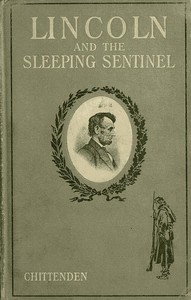
Lincoln and the Sleeping Sentinel: The True Story — Text and Context
Edition facts
The source record for Lincoln and the Sleeping Sentinel: The True Story — Text and Context measures this digital text at 10,185 words, 45 min estimated reading time, and 1 detected text section.
The text analysis averages about 19.7 words per sentence, while the detected sections provide another way to judge how the source is divided.
Project Gutenberg metadata also associates the work with “Lincoln, Abraham, 1809-1865 -- Anecdotes,” connecting these edition facts with the source record’s subject description.
Calculated from edition completeness, EPUB availability, text structure and catalogue metadata. Not a user rating.
How this score is calculated
- Description quality20 pts
- Title & short description10 pts
- Source metadata20 pts
- Text length15 pts
- Chapters / structure15 pts
- EPUB file integrity20 pts
Total of 100 points, scaled to a 2.5-5.0 range. Editions with an empty description or a missing EPUB file are not scored.
Read the Text
e regiment in his behalf. Strangers in Washington, the committee had resolved to call on me for advice, because I was a Vermonter, and they had already marched from the camp to my office since daylight that morning.
The captain took all the blame from Scott upon himself. Scott’s mother opposed his enlistment on the ground of his inexperience, and had only consented on the captain’s promise to look after him as if he were his own son. This he had wholly failed to do. He must have been asleep or stupid himself, he said, when he paid no attention to the boy’s statement that he had fallen asleep during the day, and feared he could not keep awake the second night on picket. Instead of sending some one, or going himself in Scott’s place, as he should, he had let him go to his death. He alone was guilty--“if any one ought to be shot, I am the fellow, and everybody at home would have the right to say so. There must be some way to save him, Judge!” (They all called me Judge.) “He is as good a boy as there is in the army, and he ain’t to blame. You will help us, now, won’t you?” he said, almost with tears.
Illustration: LINCOLN IN 1857
From a photograph in the collection of Charles Carleton Coffin
The other members of the committee had a definite if not a practicable plan. They insisted that Scott had not been tried, and gave this account of the proceeding. He was asked what he had to say to the charge, and said he would tell them just how it all happened. He had never been up all night that he remembered. He was “all beat out” by the night before, and knew he should have a hard fight to keep awake; he thought of hiring one of the boys to go in his place, but they might think he was afraid to do his duty, and he decided to “chance it.” Twice he went to sleep and woke himself while he was marching, and then--he could not tell anything about it--all he knew was that he was sound asleep when the guard came. It was very wrong, he knew. He wanted to be a good soldier and do all his duty. What else did he enlist for? They could shoot him, and perhaps they ought to, but he could not have tried harder; and if he was in the same place again he could no more help going to sleep than he could fly.
One must have been made of sterner stuff than I was not to be touched by the earnest manner with which these men offered to devote even their farms to the aid of their comrade. The captain and the others had no need of words to express their emotions. I saw that the situation was surrounded by difficulties of which they knew nothing. They had subscribed a sum of money to pay counsel, and offered to pledge their credit to any amount necessary to secure him a fair trial.
“Put up your money,” I said. “It will be long after this when one of my name takes money for helping a Vermont soldier. I know facts which touch this case of which you know nothing. I fear that nothing effectual can be done for your comrade. The courts and lawyers can do nothing. I fear that we can do no more; but we can try.”
I must digress here to say that the Chain Bridge across the Potomac was one of the positions upon which the safety of Washington depended. The Confederates had fortified the approach to it on the Virginia side, and the Federals on the hills of Maryland opposite. Here, for months, the opposing forces had confronted each other. There had been no fighting; the men, and even the officers, had gradually contracted an intimacy, and, having nothing better to do, had swapped stories and other property until they had come to live upon the footing of good neighbors rather than mortal enemies. This relation was equally inconsistent with the safety of Washington and the stern discipline of war. Its discovery had excited alarm, and immediate measures were taken to break it up. General W. F. Smith, better known as “Baldy” Smith, had been appointed colonel of the Third Vermont Regiment, placed in command of the post, and undertook to correct the irregularity.
Chittenden opens with a formal biographical sketch of Lincoln, tracing his ancestry, frontier upbringing, and early career in a measured, third-person voice. This introductory section, marked by phrases like “a few chief facts in Abraham Lincoln’s great career may be helpfully recalled,” establishes a documentary tone before the narrative pivots sharply.
The core of the work is a first-person account attributed to Private William Scott, recounting his pardon by Lincoln. Scott’s voice is colloquial and emotional, with hesitations (“I had expected to die, you see, and had kind of got used to thinking that way”) that contrast with the earlier formality. The shift in register—from historical summary to direct testimony—creates an intimate, dramatic center.
A Framed Narrative: From Biography to Testimony
The book’s structure is a frame: Chittenden’s authorial voice introduces Lincoln’s life, then yields to Scott’s embedded story. The transition is abrupt, moving from third-person summary (“His attendance at a regular school covered hardly more than a year”) to Scott’s direct speech (“‘My boy,’ he said, ‘you are not going to be shot to-morrow’”). This technique isolates the pardon episode as the emotional core, while the surrounding biographical material provides context without merging into the drama.
Chittenden does not attempt to blend the voices; instead, he lets Scott’s vernacular stand in stark relief. The effect is that of a historical document—a transcribed interview—placed within a conventional biography. Readers encounter Lincoln first through the lens of public achievement, then through a private, human exchange.
Lincoln’s Voice: Authority and Tenderness in Dialogue
Lincoln’s spoken words in Scott’s account are marked by a blend of authority and gentle irony. He begins with a direct command (“stand up here and look me in the face”) and then introduces the metaphor of a “bill” that only Scott can pay. The dialogue builds a moral lesson without sermonizing: Lincoln reframes punishment as a debt of future duty.
Key phrases reveal his method: “My bill is a very large one” and “There is only one man in all the world who can pay it.” The repetition of “my boy” establishes paternal warmth, while the conditional promise (“if from this day William Scott does his duty… then my debt will be paid”) turns a pardon into a covenant. The language is plain but resonant, avoiding sentimentality.
Pace and Shift: From Confession to War Chronicle
After Scott’s story concludes, the narrative pace changes again. Chittenden returns to a third-person report of Scott’s subsequent service: “He was gaining a wonderful reputation as an athlete… the strongest man in the regiment.” The tone becomes brisk and factual, listing Scott’s acts of bravery and nursing. This section compresses months into a few paragraphs, contrasting with the extended, tense scene of the pardon.
The final shift occurs in Chapter IV, which opens with a geographical and military description: “The sluggish Warwick River runs from its source, near Yorktown, across the Peninsula.” The language becomes that of a campaign history, with dates and troop movements. This acceleration mirrors Scott’s own transformation from condemned soldier to exemplary fighter, and the book’s movement from personal drama to the broader war.
Chittenden’s account is best read as a layered document: the biographical frame, the transcribed testimony, and the war narrative each demand different attention. Listen for the shifts in voice—from formal historian to grieving soldier to battle reporter—as they reveal how Lincoln’s single act of clemency is embedded in a larger story of duty and sacrifice. The book’s brevity (under 11,000 words) rewards careful attention to its structural seams.
In Chittenden's little book, Lincoln's mercy arrives quietly, through a soldier's weary words. That same sense of patient, unspoken endurance seems to echo across the masonry of Fort Pulaski National Monument, Georgia — Edition Insights—both are records of men holding fast, awaiting a pardon or a dawn that might never come. Such solemn waiting binds them, I think, like bookends on a shelf.

There are no reviews for this eBook.
What was your reading experience?
Capture what you thought, learned, and would like to remember.