
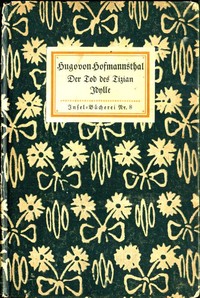
Der Tod des Tizian. Idylle. Zwei Dichtungen by Hugo von Hofmannsthal
Hugo von Hofmannsthal was a key figure in Austrian literature, part of the vibrant cultural scene in Vienna around 1900. This book brings together two of his early poetic dramas, which are less plays to be performed and more lyrical conversations to be absorbed.
The Story
'The Death of Titian' isn't a biography. We never see the Renaissance painter. Instead, we watch his young apprentices gather in a moonlit garden as Titian lies dying inside his villa. They're paralyzed. They talk passionately about art, beauty, and their master's genius, but they can't bring themselves to act or even go inside. The drama is in their waiting, their fear, and the feeling that an era of sublime beauty is ending with him.
'Idyll' is even more abstract. An old man and a young boy sit in a garden. Their conversation is circular and symbolic, touching on memory, nature, and the passage of time. The boy is eager and questioning; the old man offers answers that feel like riddles. It's a quiet, philosophical piece where the 'plot' is the exchange of ideas and the melancholy atmosphere.
Why You Should Read It
Don't come to this book for a fast-paced story. Come for the language and the feeling. Hofmannsthal writes with a poet's ear. His sentences are lush and heavy with meaning, painting vivid pictures of twilight gardens and a deep, pervasive sadness for a fading world. I was struck by how modern the anxiety feels. His characters are acutely aware that something is ending—a style of art, a way of life, a sense of connection—and they don't know what comes next. That sense of standing on a precipice, between the old and the new, is incredibly resonant. These pieces are like beautifully composed snapshots of a specific cultural moment, full of doubt and exquisite beauty.
Final Verdict
This is a book for a specific mood. It's perfect for lovers of poetry, symbolism, and early modernist literature. If you enjoy the works of Rilke or the atmospheric dread of some fin-de-siècle art, you'll find a lot to admire here. It's also great for readers who like short, impactful works that demand and reward close attention. Be warned: it's not light reading. But if you're willing to slow down and sink into its world, it's a haunting and memorable experience.
The copyright for this book has expired, making it public property. You can copy, modify, and distribute it freely.
John Lopez
3 months agoThis is an essential addition to any academic digital library.
Nancy Rodriguez
8 months agoI was skeptical about the depth of this book at first, but the author manages to bridge the gap between theory and practice effectively. This exceeded my expectations in almost every way.
Amanda Hill
5 months agoComprehensive and well-researched.
Susan Allen
1 year agoLoved it.

Kimberly Taylor
2 months agoI decided to give this a try based on a colleague's recommendation, it manages to maintain a consistent flow even when discussing difficult topics. This should be on the reading list of every serious professional.